“You didn’t buy Guesty to answer WiFi questions at midnight. You bought it to manage channels, sync calendars, and automate pricing. So why are you still typing ‘The lockbox code is 4523’ 15 times a week?”
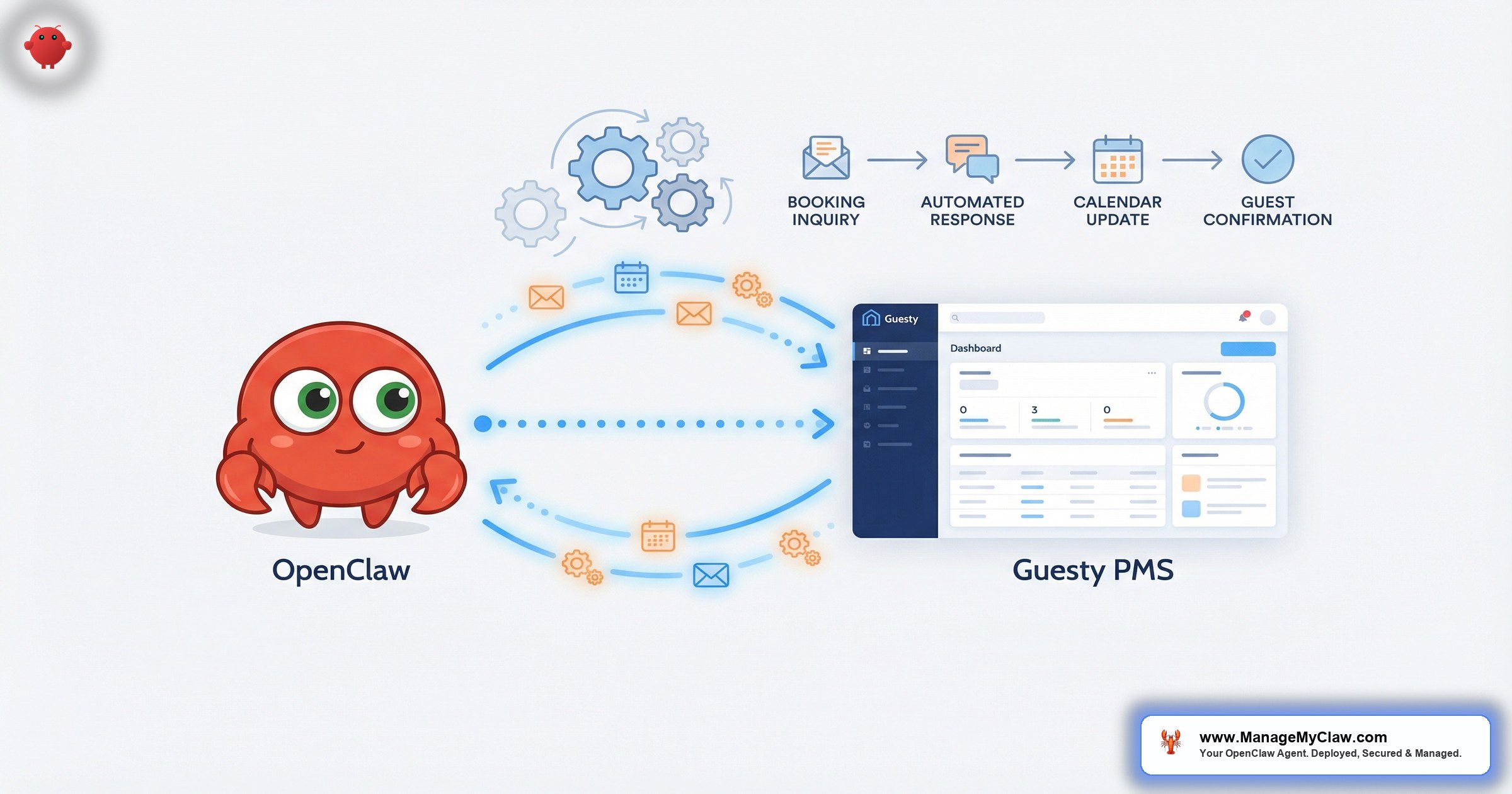
An OpenClaw Guesty integration connects an open-source AI agent framework — 250,000+ GitHub stars, deployed on bare-metal servers via systemd — to the notification emails your Guesty PMS already sends. OpenClaw is not a Guesty replacement. It’s an AI brain that sits on top of your PMS, reading the emails Guesty generates for new bookings, guest messages, and operational alerts, then taking action: drafting personalized guest replies, coordinating cleaning teams, generating owner reports, and handling the 80% of operational tasks that Guesty surfaces but can’t resolve on its own.
Guesty is excellent at what it does — channel management, unified inbox, pricing rules, payment processing. But it doesn’t compose contextual replies to guests asking about the best brunch spot near your downtown condo. It doesn’t translate a late-checkout request from Japanese into a polite decline that references your specific turnover schedule. It doesn’t notice that 3 guests in a row mentioned the hot water taking too long and flag it as a maintenance trend. That’s where OpenClaw takes over.
Think of it this way: Guesty is the nervous system that keeps your STR business wired together. OpenClaw is the brain that actually thinks about what to do with the signals coming in. You need both.
Guesty Manages Your Properties. Nobody’s Managing Your Guest Communication.
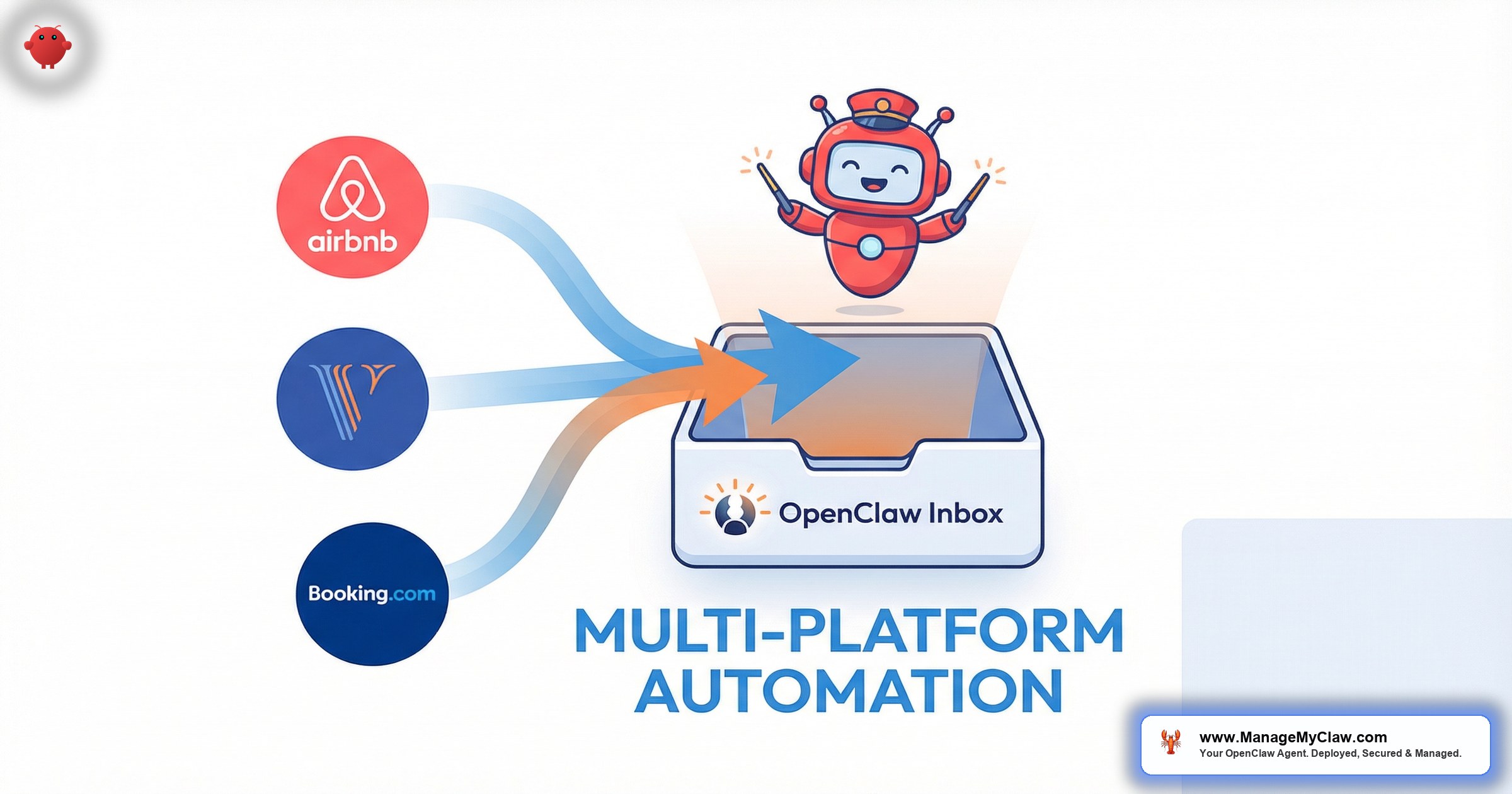
Guesty’s unified inbox collects messages from Airbnb, VRBO, Booking.com, and your direct booking site into 1 place. That’s the organizational layer. But when a guest writes “Hey, we’re arriving at 2 PM instead of 4 PM, is early check-in possible? Also, any restaurant recs for a group of 8 near the property?” — Guesty shows you the message. It doesn’t answer it.
You can set up Guesty’s auto-responses and saved templates. Those cover the basics: booking confirmations, check-in instructions, checkout reminders. They work great for scheduled communication. They fall apart the moment a guest asks something that isn’t on the template list — which, if you’ve hosted more than 10 guests, you know happens constantly.
Here’s what Guesty handles vs what falls through the cracks:
| Guesty Handles | Falls to You (Until OpenClaw) |
|---|---|
| Channel sync (Airbnb, VRBO, Booking.com) | Personalized guest replies to unique questions |
| Calendar management | Multi-language communication |
| Pricing rules & revenue management | Complex early check-in / late checkout negotiations |
| Payment processing | Local recommendation requests (restaurants, activities) |
| Scheduled auto-messages (templates) | Mid-stay issue triage and response |
| Task assignment for cleaning teams | Review response drafting |
| Owner statements | Cleaning verification follow-up |
The right column is where your time goes. It’s 15–25 messages per booking, multiplied by every active listing, multiplied by every concurrent guest. At 20 listings, that’s 400+ messages a month that templates can’t handle. Our guide on AI guest messaging breaks down the volume math in detail.
Guesty’s like having a brilliant filing cabinet. Everything’s organized, labeled, color-coded. But filing cabinets don’t write the replies. That’s still you, at 11 PM, squinting at your phone in bed.
How OpenClaw Connects to Guesty (No API Keys Required)
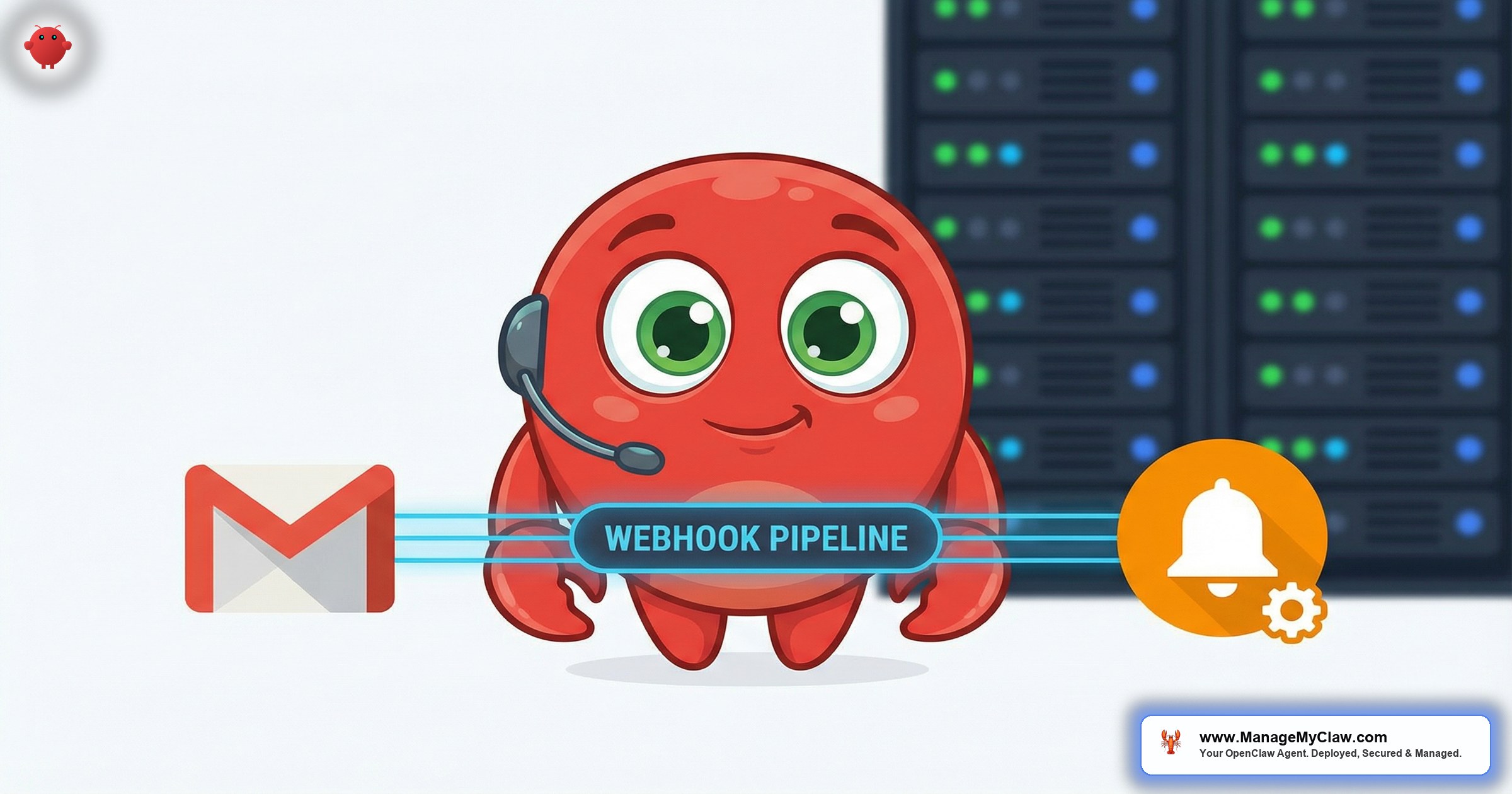
The openclaw guesty integration doesn’t require Guesty API access, webhook configuration, or any modifications to your Guesty account. It works through the email notifications Guesty already sends you. Every time a guest sends a message, Guesty fires an email notification to your inbox. Every new booking triggers an email. Every checkout triggers an email. OpenClaw monitors that inbox via Gog OAuth and processes each notification as it arrives.
Here’s the flow:
Guesty’s API requires an enterprise plan for full access, and API integrations break when Guesty updates endpoints. The email notification approach is platform-agnostic, works on every Guesty plan, and doesn’t add a dependency on Guesty’s API stability. If Guesty changes their notification format, OpenClaw adapts — no code changes on your end.
It’s the same approach you’d use if you hired a virtual assistant and told them “watch my email, answer what you can, escalate what you can’t.” Except this assistant processes 40 messages before your VA finishes reading the first one.
5 Things OpenClaw Does That Guesty Can’t
1. Contextual Guest Replies (Not Templates)
When a guest asks “Is there a good Italian restaurant within walking distance that can seat 6 people on a Saturday night?” — Guesty has no answer for that. A template can’t handle it. OpenClaw reads the question, checks your property knowledge base (which includes your curated local recommendations organized by cuisine, distance, and group size), and drafts a specific reply: the restaurant name, the walk time, a note about reservations on weekends, and the phone number. All in the guest’s language.
2. Multi-Language Communication at Scale
Your Guesty templates are in English. Maybe you’ve translated a few into Spanish and French. OpenClaw handles 90+ languages automatically. It detects the guest’s language from their message and responds fluently — not machine-translated, but composed natively by the language model. Your knowledge base stays in English. The translation happens at the response layer, not the data layer.
If you’re running properties in Miami, Barcelona, or Bali, multilingual communication isn’t a nice-to-have. It’s 30–50% of your guest interactions. And every slow or awkward translation costs you a star on the review.
3. Cleaning Coordination from Checkout Notifications
Guesty can assign cleaning tasks. But when a guest messages at 9 PM saying “We’re checking out at 7 AM instead of 11 AM” — Guesty doesn’t automatically adjust the cleaning schedule. OpenClaw reads the early checkout notification, updates the internal schedule, messages your cleaning coordinator with the new time, and confirms the change back to the guest. 1 message from the guest triggers 3 coordinated actions.
4. Owner Report Summaries
If you manage properties for owners, they want updates. OpenClaw aggregates booking data from Guesty notifications — occupancy, revenue, guest feedback themes, maintenance flags — and drafts weekly or monthly owner summaries. You review and send. What used to take 45 minutes per owner takes 2 minutes.
5. Maintenance Pattern Detection
3 guests in 2 weeks mention the shower pressure is low at Property #7. Guesty shows you 3 individual messages. OpenClaw connects the dots: “Recurring guest complaint at [property]: shower pressure. 3 mentions in 14 days. Recommend maintenance inspection.” That pattern recognition turns reactive maintenance into proactive maintenance — before the 4th guest leaves a 3-star review about it.
Setting Up the OpenClaw Guesty Integration
Because the integration runs through email notifications (not direct API), the setup is straightforward. Here’s what a managed deployment covers:
Prerequisites
- Guesty account with email notifications enabled (any plan)
- Gmail address receiving Guesty notifications
- VPS for OpenClaw ($12–24/month) — or existing server
- Property details for knowledge base: house rules, access codes, local recs, appliance guides
Total time from start to fully up and running: under 1 business day for a 10-property portfolio. The OpenClaw deployment runs on bare-metal via systemd — no Docker containers, no orchestration overhead. It starts on boot, restarts on failure, and logs to journald for debugging.
What Stays in Guesty vs What Moves to OpenClaw
This isn’t a migration. You’re not replacing Guesty. You’re adding a layer on top. Here’s the clear boundary:
| Stays in Guesty | Handled by OpenClaw |
|---|---|
| Channel management & calendar sync | Contextual guest replies |
| Pricing & revenue management | Multi-language communication |
| Payment processing & invoicing | Cleaning coordination from notifications |
| Booking management & modifications | Owner report drafting |
| Scheduled auto-messages (templates) | Maintenance pattern detection |
| Team task assignment | Review response drafting |
| Financial reporting | Escalation routing with full context |
Guesty remains your system of record. OpenClaw is the operational intelligence layer. The 2 tools don’t compete — they cover different halves of the same workflow. For a deeper look at everything OpenClaw automates for STR hosts, including review management and proactive scheduling, start with the full guide.
You wouldn’t replace your PMS with an AI agent any more than you’d replace your accountant with a calculator. The calculator makes the accountant faster. OpenClaw makes Guesty smarter.
What This Actually Costs (Honest Numbers)
Guesty already costs $24–49 per listing per month, depending on your plan. Adding OpenClaw doesn’t add per-listing fees. Here’s the cost structure for a 20-listing portfolio:
| Cost Item | Monthly | Annual |
|---|---|---|
| VPS hosting (bare-metal, systemd) | $12–24 | $144–288 |
| LLM API costs (message volume dependent) | $40–80 | $480–960 |
| ManageMyClaw deployment (one-time) | — | $499 |
| Year 1 total | $52–104 | $1,123–1,747 |
Compare that to hiring a virtual assistant for guest communication at $800–1,500/month. Or to the time cost of handling it yourself: 20–30 hours/month at 20 listings, which is a half-time employee’s workload. The OpenClaw layer pays for itself within the first month if it saves you even 10 hours.
The real ROI isn’t the dollar savings. It’s the listings you can add without adding headcount. 10 more listings at the same operational cost changes the trajectory of your business entirely.
Guest Data Stays on Your Server
Every guest message contains personal information — names, travel dates, contact details, sometimes payment references. With the openclaw guesty integration, that data stays on your VPS. It doesn’t pass through a 3rd-party SaaS platform’s servers. OpenClaw runs on bare-metal, managed by systemd, with the 9-point security hardening from a managed deployment: non-root process isolation, tool permission allowlists, encrypted credential storage, firewall rules, and Gog OAuth token management.
For property managers handling EU guests, this means your data processing happens on infrastructure you control — which simplifies GDPR compliance conversations with property owners who care about where their guests’ data goes. If you’re also looking at how OpenClaw integrates with Hostaway, the same security model applies regardless of which PMS you use.
Frequently Asked Questions
Does this require Guesty’s API or a specific Guesty plan?
No. The integration works through Guesty’s email notifications, which are available on every plan. No API keys, no webhook setup, no enterprise tier required. If your Guesty account sends you email notifications for guest messages and bookings, OpenClaw can read and act on them.
Will guests see replies coming from a different address?
No. Replies route through Guesty’s email reply mechanism — the guest sees the response in their Airbnb, VRBO, or Booking.com message thread, exactly as if you typed it yourself in Guesty’s inbox.
What if I already use Guesty’s auto-messages and saved replies?
Keep them. Guesty’s scheduled auto-messages (booking confirmations, check-in sequences) handle time-based triggers well. OpenClaw handles the reactive communication — the questions guests ask between your scheduled messages. The 2 systems complement each other without overlap.
How many properties can 1 OpenClaw instance handle?
A single OpenClaw instance on a $24/month VPS handles 50+ properties comfortably. Each property has its own knowledge base. The agent identifies which property the message relates to from the Guesty notification and pulls the right KB automatically. No additional instances needed as you scale.
Can OpenClaw also handle direct booking guests (not through Guesty)?
Yes. OpenClaw monitors your Gmail inbox, so any guest communication that arrives by email — whether routed through Guesty, through your direct booking site, or sent directly — gets processed by the same agent with the same knowledge base. See the full OpenClaw STR guide for the complete channel list.